
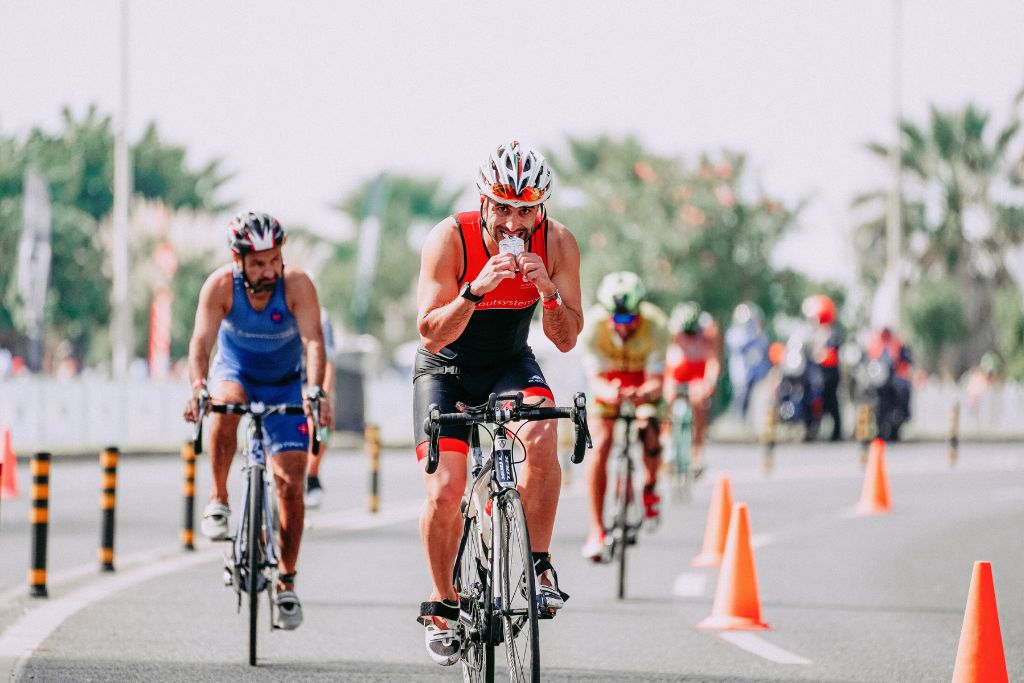
What to Eat During an Ironman: Nutrition Strategies for Race Day
Fuel is everything on Ironman race day. You’re asking your body to swim almost 4 km, bike 180 km, and run a full marathon—and what you eat (and when) can make or break your performance.
Unlike a standalone swim, bike, or run, fuelling for an Ironman comes with its own set of challenges. You’re dealing with up to 17 hours of continuous movement, shifting intensities, transitions, heat, and a marathon that often turns into a walk-run survival effort. To get through it all, you need a nutrition plan that keeps your energy steady, your stomach happy, and your electrolytes dialled in from start to finish.
In this guide, we’ll break down what to eat during each leg of the race, how much you need, and the key fuelling lessons I learned during my first Ironman.
The Ordinary Athlete contains affiliate links and is a member of the Amazon Services LLC Associates Program. If you make a purchase using one of these links, we may receive compensation at no extra cost to you. We only recommend products and services we use and trust. Read our disclaimer for more information.
Why Ironman Nutrition is So Tricky
An Ironman isn’t just a long day of exercise—it’s a fuelling puzzle. You’re burning 7,000 to 10,000+ calories, losing litres of sweat, and trying to take in enough carbs, fluids, and sodium to keep moving—all without upsetting your gut.
Here’s what you’re up against:
- Gastrointestinal distress from jostling, heat, nerves, or poor food choices
- Dehydration and sodium loss from hours of sweating (especially if you’re a salty sweater)
- Energy crashes from under-fuelling, over-fuelling, or poor carb timing
- Appetite loss from heat, intensity, or race-day nerves
The key? Eat early and often, stay consistent, and practice everything in training. The more you test and refine your nutrition ahead of time, the better your body (and stomach) will handle it on race day.

How Much to Eat During an Ironman
There’s no one-size-fits-all formula, but most endurance athletes aim for these hourly targets:
| Nutrient | Per Hour Target |
|---|---|
| Carbohydrates | 60–90g per hour |
| Fluids | 500–1000 ml per hour (adjust for sweat rate & weather) |
| Sodium | 300–1000+ mg per hour (individualized)* |
💡 Tip: Get a personalized estimate of your carb, fluid and sodium needs by using this Fuel & Hydration Planner
You may not be able to hit these perfectly—especially during the swim or early in the race—but your average intake across the day should aim to get close. The goal is to avoid glycogen depletion, dehydration, and sodium imbalance, which can cause everything from bonking and cramps to (in my case) blurred vision.
Research also shows that dehydration as low as 2% of body mass can impair endurance performance, and that rehydration strategies must be individualized to replace both fluid and sodium losses.
Note on Sodium: Electrolyte needs vary hugely between athletes. If you’re a heavy or salty sweater (like me), it’s worth getting a sweat test to understand your sodium loss rate. That way, you can tailor your hydration strategy to match your actual needs—rather than guessing and risking issues mid-race. A 2022 review found that both overly low and overly high sodium intake can harm performance and increase risk of cramping or hyponatremia in endurance athletes.
It’s also important to train with whatever electrolyte drink will be served on‑course. Some—like Mortal Hydration, which was on offer at my Ironman—didn’t agree with everyone. According to a 2016 study, the variation in sweat sodium losses between athletes is large enough that one electrolyte formulation may suit some but be problematic for others. I personally chose to avoid it until the run, just to be safe.
What to Eat During an Ironman
To help you prepare your race-day nutrition plan, here’s a breakdown of what to eat during each leg of the Ironman, including what worked for me.

Swim (3.8 km)
You can’t eat during the swim, so what you consume beforehand is critical for setting up the rest of your day.
2–3 hours before:
Eat a low-fibre, carb-rich breakfast, aiming for 400–600 calories with 100–200 grams of carbs, depending on your size and needs. Good options include:
- Bagels or white toast with peanut butter and jam
- Oatmeal with banana (a fan favourite—though oats are a bit higher in fibre, so skip them if you’re prone to GI issues)
- Waffles or pancakes with maple syrup
- Rice pudding
- Semolina porridge with jam
- Low-fibre cereal with milk
To sneak in extra carbs, don’t be shy with the maple syrup, honey, or jam. You can also add a banana, drink juice, or sip a sports drink with your meal.
If you normally drink caffeine in the morning, go ahead and have it with breakfast (see the caffeine note below). And don’t forget to hydrate—I always start my day with an electrolyte drink.
30–45 minutes before start:
- Sip a carbohydrate-based drink (e.g., Skratch, Tailwind, Precision Fuel & Hydration)
- Or take a small energy gel, if your stomach handles it well pre-exercise
Right before the gun:
Optional: one final sip of water or gel, if tolerated.
💡 What worked for me:
I had a bowl of oatmeal when I first got up, followed by a banana and a small juice on my way to the start. And, about 30 minutes before the gun, I took a caffeinated gel. This gave me roughly 120 grams of carbs—enough to feel energized but not too full heading into the swim.
Note on Caffeine:
Caffeine can be a helpful performance booster, especially later in the race—so try not to front-load it. Some athletes limit caffeine early in the day to stay sensitive and get the most benefit when they need it most (like on the bike or run).
Another strategy is to cut caffeine during race week, so it hits harder on race day. That said, if you haven’t trained with caffeine before, don’t try it for the first time in your Ironman.
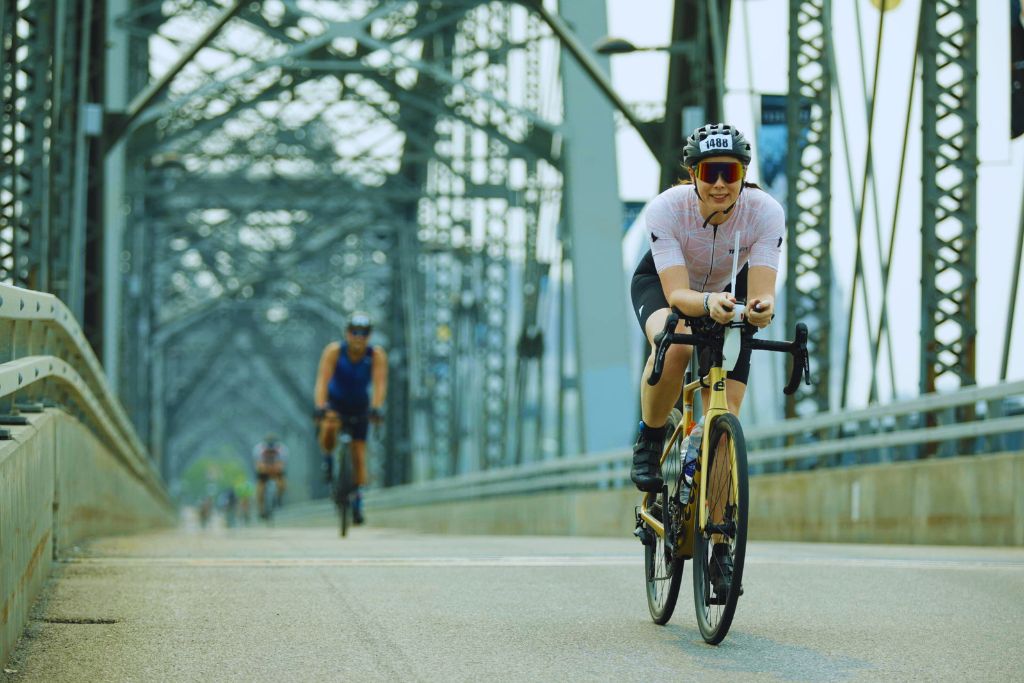
Bike (180 km)
This is where you’ll take in the majority of your calories. Why? It’s the longest leg of the race, and your stomach is typically more settled than on the run. Ideally, you should aim for:
- Carbohydrates: 60–90g per hour
- Fluids: 500–750 ml per hour
- Sodium: 500–1000+ mg per hour (depending on your sweat rate)
While these are general guidelines, keep in mind that your needs might be even higher than this. On hot days, or if you’re a particularly salty sweater, you’ll need more fluids and electrolytes. And the more carbs your gut can tolerate, the better. Most pros now aim for 90–120 grams per hour, with some—like Cam Wurf, who recently set the fastest Ironman bike split of all time—reportedly hitting 200g of carbs per hour!
Popular fuelling options include:
- Liquid nutrition: Maurten 320, Tailwind, Precision Fuel & Hydration
- Energy bars: Maurten Solid 160, Näak Ultra Energy Bars, Clif Bars
- Gels: Maurten, SIS, Honey Stinger, GU (go easy—too many gels on the bike can cause GI issues)
- Chews or blocks: CLIF Bloks, Honey Stinger Energy Chews
- Real food: Bananas, Rice Krispie treats, white-bread sandwiches, etc.
- Tip: Bananas are usually available at aid stations; stash other real food in your personal needs bag
- Electrolytes: Electrolyte drink mix, SaltStick caps/hydration tablets, or chews,
💡 What worked for me (and what didn’t):
I primarily relied on a mix of Tailwind, chews, and bars, aiming for around 60–90g of carbs per hour. In practice, I ended up on the lower end of that range. I’d packed several bars—which I’d enjoyed during training—but they just didn’t go down well on race day. I only managed a couple.
That said, I still felt good with ~60g/hour, but I do wonder how much better my performance might have been if I’d been able to consume more.
One thing that did go really well was my fluid intake. Thanks to my Profile Design front-mounted hydration system, I could keep sipping easily while staying in aero position. But I didn’t take enough electrolytes.
I had SaltStick caps and chews, which I took every 30 minutes. But in hindsight, I should have front-loaded more aggressively earlier in the bike and taken them more frequently. My vision started to blur near the end of the ride—a sign I’d fallen behind on sodium. In hot conditions, I now know I need to take electrolytes every 15 minutes to stay ahead of the issue.
Run (42.2 km)
By the time you hit the marathon, eating becomes more challenging. Your gut is under stress, your core temp is likely elevated, and flavour fatigue has fully kicked in. But you still need to aim for 60–90g of carbs per hour to maintain energy levels and avoid crashing.
The trick is finding simple, palatable foods that your body can tolerate—ideally in small, frequent doses—and continuing to take in electrolytes and fluids, especially if it’s hot or you’re moving slower than expected.
You may also find your preferences shift dramatically from the bike. What sounded good at 9:00 a.m. might now feel impossible. Be ready to adapt in the moment based on what your body wants and needs.
Go-tos for the run:
- Gels or chews: Maurten, SIS, Honey Stinger, GU (more frequent, smaller doses often work best)
- Cola and electrolyte drinks (readily available at most aid stations)
- Fruit: orange slices, bananas, watermelon, grapes (usually available at aid stations)
- Pretzels & chips (helps combat flavour fatigue – usually available at aid stations)
- Liquid calories: Maurten 320, Tailwind, Precision Fuel & Hydration (useful if you carry a handheld bottle or soft flask)
💡 What worked for me:
By the time I started the run, all I wanted was Coke and orange slices—neither of which I’d specifically practiced with in Ironman training, but they’d worked for me in ultras, and my body was craving them. I grabbed some at almost every aid station (roughly every 2 km), along with water, ice, and sometimes an electrolyte drink.
I also carried my own salt caps and chews, which I took at every second aid station. And although I didn’t particularly want them, I made an effort to take a gel every 45 minutes—timed just before an aid station so I could immediately wash it down with water.
This strategy worked well, and I ended up having a really strong run, despite how tough the day had been.

Fuelling Tips & Mistakes to Avoid
Start fuelling early.
Don’t wait until you feel hungry or tired—fuel proactively, not reactively. Aim to take in calories within the first 30 minutes of the bike.
Train your gut.
Practice your exact race-day nutrition strategy—same products, same timing—during long rides, brick sessions, and race simulations.
Don’t skip sodium.
Especially if you’re a salty sweater. Low electrolytes can lead to cramps, dizziness, nausea, and (in my case) blurred vision.
Beware of real food overload.
I thought I’d want more solids, but in the heat and effort, I mostly stuck with liquids and gels. Test this in training.
Stick to what you know.
Avoid new fuels, drinks, or supplements on race day. Even something “healthy” can backfire if your stomach isn’t used to it.
Practice with on-course nutrition.
Find out what will be available at aid stations ahead of time, and train with those options so your gut isn’t caught off guard.
Final Thoughts: Ironman Nutrition is a Skill
Fuelling for an Ironman is a skill you need to train like any other part of your race—in fact, it’s often called the fourth discipline.
To succeed on race day, your nutrition plan should be:
- Practiced in training
- Personalized to your needs and preferences
- Adaptable when things go sideways
Take the time to dial it in—and remember, your stomach doesn’t have to be your limiter. With the right strategy, nutrition can become one of your biggest strengths on race day.
What’s your Ironman go-to fuel? Got questions or tips? Drop them in the comments—I’d love to hear what’s worked for you!


